

01
Crude oil profile
The starting oil profile influences whether a physical or chemical refining route is more appropriate.
Refining & Blending
Physical and chemical refining, blending know-how and laboratory monitoring operate as one controlled system. The route is selected around the incoming oil, the target specification and the buyer's final application.
60,000 t/y
Refinery capacity
200 t/day
Physical refining
200 t/day
Chemical refining
24/7/365
Operating continuity
Route selection logic
Route selection is not a standard formula. Incoming profile, target parameters, intended use and recovery logic are evaluated together before the process architecture is defined.
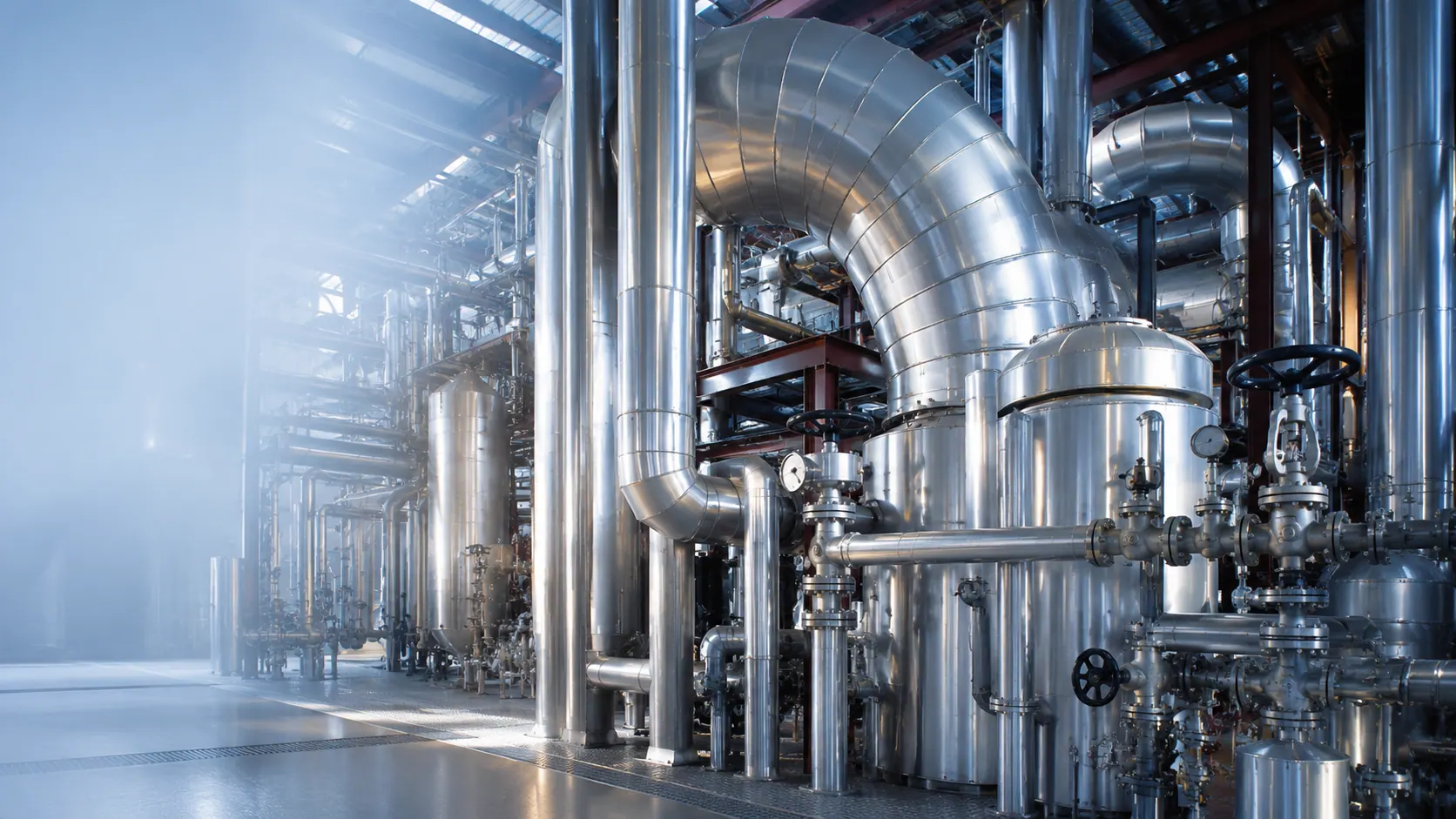
Industrial platform
Route selection connects plant capability with the required oil profile.
The starting oil profile influences whether a physical or chemical refining route is more appropriate.
Application, destination market, quality parameters and release expectations shape the process target.
Process choices are connected to oil use, by-product recovery and the broader circular value-chain logic.
Food, foodservice, private label, cosmetics and industrial uses may require different quality and documentation priorities.
Refining architecture
Physical and chemical refining are complementary process architectures. The appropriate route is assessed according to crude oil profile, target specification, application and release requirements.
Refining route 01
200 t/day
A four-stage route selected when the incoming profile and target specification support physical deacidification.
 01
01Prepares the crude oil profile for the following treatment stages.
 02
02Supports the controlled reduction of pigments and residual impurities.
 03
03Aligns free-fatty-acid content through the selected physical route.
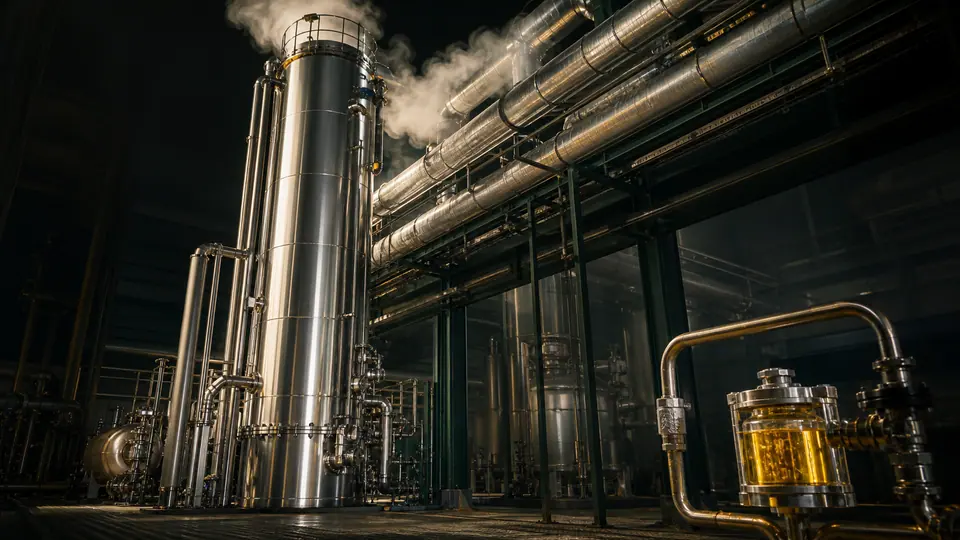 04
04Completes the route by aligning volatile and sensory characteristics.
Refining route 02
200 t/day
A four-stage route built around neutralization, followed by controlled purification and finishing.
 01
01Targets free fatty acids through a controlled chemical treatment.
 02
02Prepares the oil for the following purification and finishing stages.
 03
03Supports colour alignment and the reduction of residual impurities.
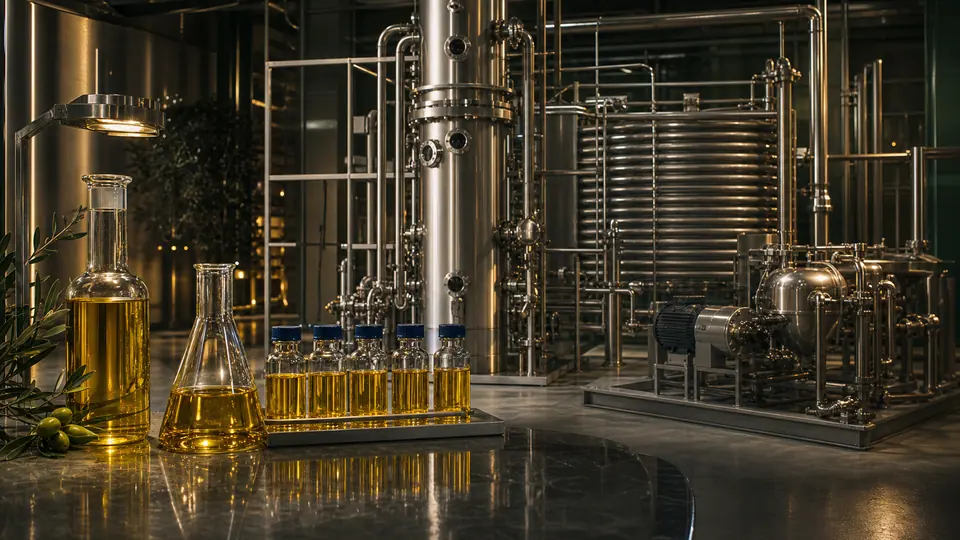 04
04Finalizes the oil profile before blending, checks and release.
The process diagrams provide a high-level view. Final route selection and operating parameters remain subject to technical assessment of the oil and customer specification.
From buyer brief to release
The buyer does not need to prescribe the process. A clear application, target specification, destination, format and documentation brief gives the technical team the information needed to evaluate the route.

In-house laboratory
Process checks, analytical assessment and release documentation operate within the same industrial control logic.
Laboratory checks support process control and alignment with the target oil profile.
Gas chromatography, spectrophotometry and continuous checks contribute to the quality assessment.
Final checks connect the approved profile to COA-backed shipment release.
01
Olive oil, pomace oil, grapeseed oil, specialty oil or derivative application.
02
Specification, customer quality requirements, destination-market expectations and release documents.
03
Bulk, tank truck, flexitank, container tank, packed format or storage needs.
04
COA logic, BRC, Organic, Kosher, HACCP or buyer-specific qualification documents where applicable.
Technical orientation
The choice between physical and chemical refining depends on crude oil profile, target specification, process suitability and the customer's final application.
Laboratory monitoring supports process control, blending alignment and documented release, helping industrial scale become repeatable quality.
Technical specification
Send crude oil profile, target parameters, intended application and documentation needs for a more precise technical discussion.
Include in your brief
One public B2B route
connect@umbriaolii.com
Documented release logic
COA-backed
No public live prices
Qualified follow-up only